
Receive email updates from the Fair Food Network
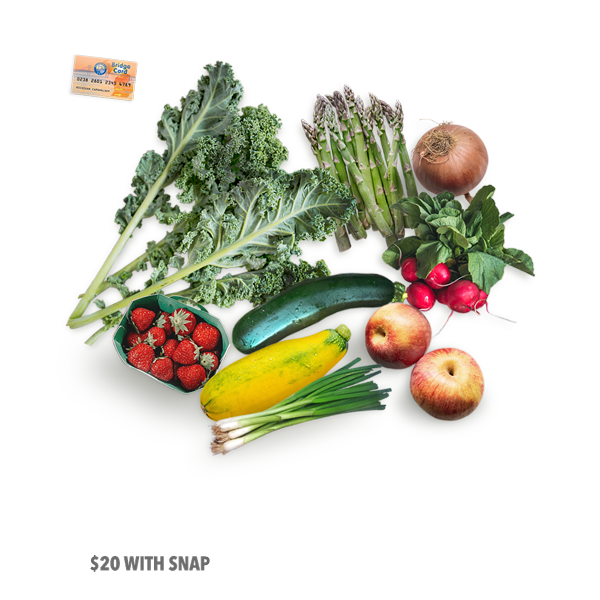
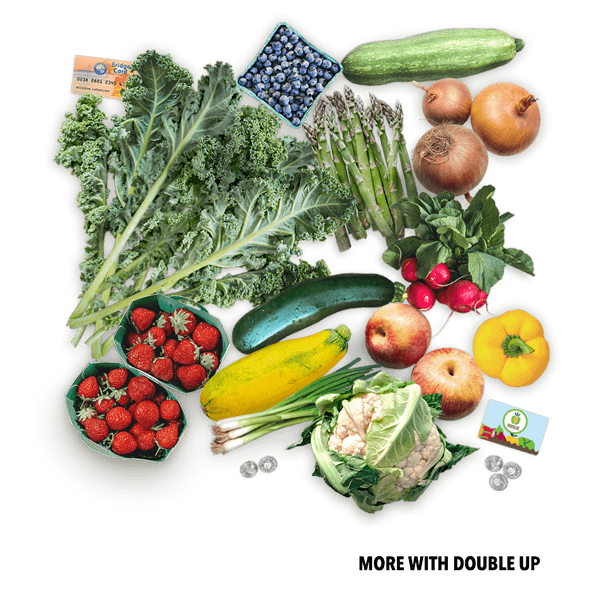
When a person eligible for SNAP (Supplemental Nutrition Assistance Program) uses his or her SNAP Bridge Card to shop for food at a farmers' market, the amount of money that he or she spends is matched with Double Up Food Bucks bonus tokens.
Eat More Fresh Fruits & Vegetables!
Double Up Food Bucks ended for the season on October 30 at all markets except the Flint Farmers Market.
In Flint, it will continue through November 30.
Please check back frequently for program updates. DUFB will be back in summer 2012!
Fresh fruits and vegetables help you stay healthy. Eating MORE fruits and vegetables can help you lose weight, stay fit, and reduce your risk for many chronic diseases. AND fruits and vegetables taste great – especially when you get them fresh and in season. Best of all, you can now stretch your food dollars and get MORE fresh Michigan-grown produce when you shop at a farmers’ market that is part of Fair Food Network’s Double Up Food Bucks program!
Why eat more fruits and vegetables?
Where can you get fresh fruits and vegetables?
Tips for selecting the best produce
Tips for storing your fresh produce
Tips for preparing your fresh fruits & veggies
Latest News
Watch the Double Up
Food Bucks Video
See how Double Up Food Bucks helps stretch Maryln Minus’ food budget at Eastern Market.
Why eat more fruits and vegetables?
Eating more fruits and vegetables can:
- Help you lose weight and stay fit
- Help you get more calcium, iron, vitamins and minerals
- Reduce the risk of type 2 diabetes, high blood pressure, heart disease, stroke, and cancer
-
Taste great – especially when you get them fresh and in season!
Where can you get fresh fruits and vegetables?
Farmers’ markets are a great place to buy fresh produce, and now more markets than ever accept your SNAP Bridge Card!
Tips for selecting the best produce:
- Buy fruits and vegetables at the farmers’ markets – when they are fresh and in season, they cost less. Visit http://localfoods.about.com/od/searchbyregion/a/MidwestSeasons.htm to learn what is in season in Michigan.
- Purchase produce that is not bruised or damaged, and choose a colorful variety of fruits and vegetables.
- Bag fresh fruits and vegetables separately from meat, poultry and seafood products when packing them to take home from the market.
- Pre-cut produce can cost much more than whole, but if you choose pre-cut produce - such as a half a watermelon or bagged mixed salad greens - choose only those items that are refrigerated or surrounded by ice.
-
For more tips, visit the U.S. Food & Drug Administration http://www.fda.gov/food/resourcesforyou/consumers/ucm114299#buying
Tips for storing your fresh produce:
- Keep your refrigerator set at 40° F or below – use a fridge thermometer to check.
- Certain perishable fresh fruits and vegetables (like strawberries, lettuce, herbs, and mushrooms) can be best maintained by storing in a clean refrigerator at a temperature of 40° F or below. If you're not sure whether an item should be refrigerated, ask your farmers’ market vendor.
- Pre-cut or peeled produce should be refrigerated immediately.
- Keep fruits and vegetables in separate drawers in the refrigerator – fruits give off ethylene gas which can shorten the storage life of vegetables. Some vegetables give off odors that can be absorbed by fruits and affect their quality.
-
For more tips, visit the U.S. Food & Drug Administration http://www.fda.gov/food/resourcesforyou/consumers/ucm114299#storage
Tips for preparing your fresh fruits & veggies:
- When preparing any fresh produce, begin with clean hands. Wash your hands for 20 seconds with warm water and soap before and after preparation.
- Even if you plan to peel the produce, it should all be thoroughly washed before eating. Wash fruits and vegetables under running water just before eating, cutting or cooking – soap, detergent, or commercial produce wash is not recommended.
- Wash cutting boards, dishes, utensils, and countertops with hot water and soap between preparing raw meat, poultry, and seafood and preparing produce that will not be cooked.
- Cut away any damaged or bruised areas on fresh fruits and vegetables before preparing and/or eating. Produce that looks rotten should be discarded.
- You can find lots of recipes at http://recipefinder.nal.usda.gov.
-
For more tips, visit the U.S. Food & Drug Administration http://www.fda.gov/food/resourcesforyou/consumers/ucm114299#preparation